

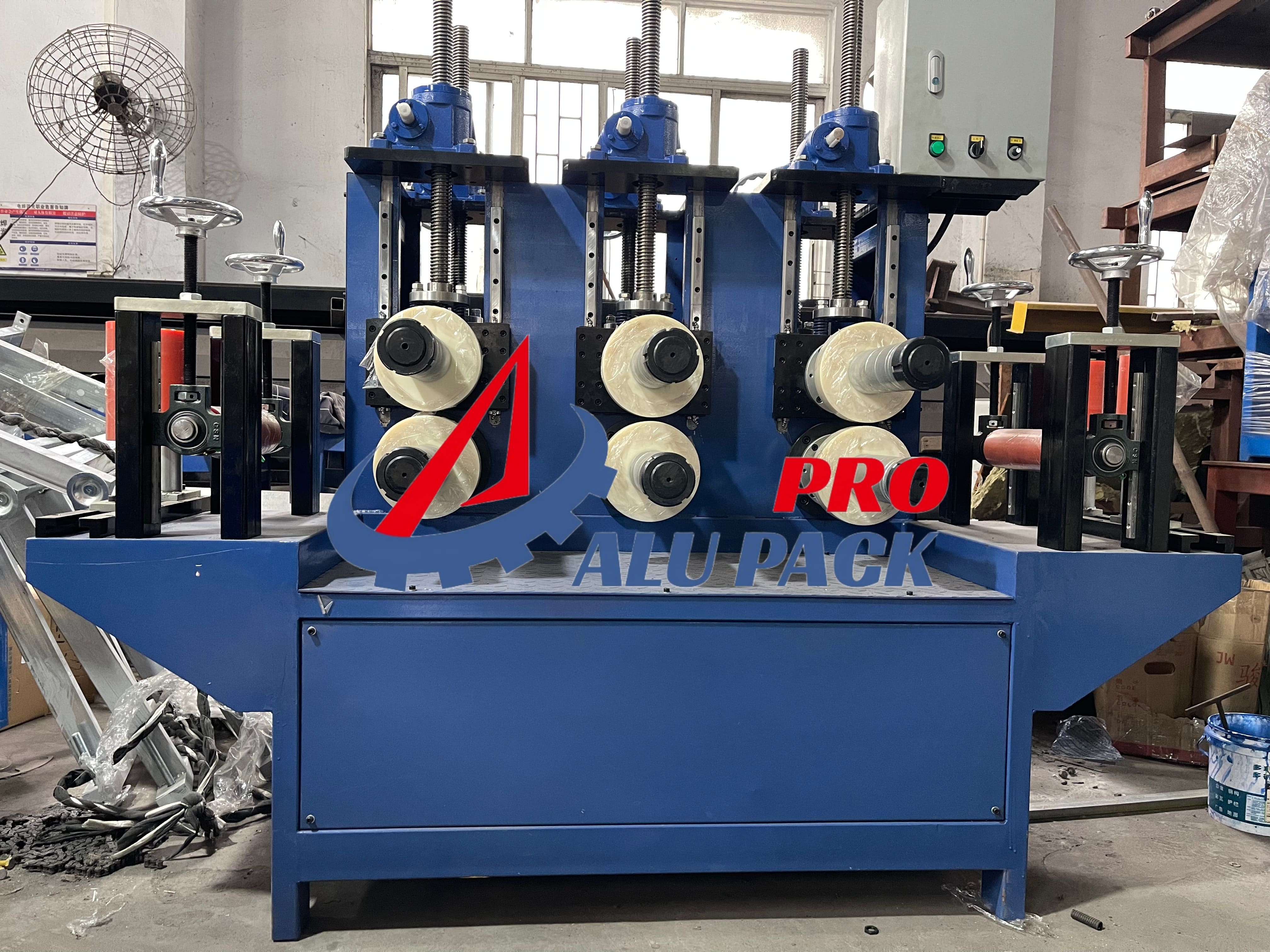
In the aluminum processing industry, the aluminum correction machine, aluminum straightening machine and aluminum surface shaping machine are essential equipment to ensure the flatness and precision of aluminum profiles and sheets. However, long-term high-intensity operation will inevitably lead to various small faults, which affect production efficiency and product quality. This article summarizes the most common faults of these three types of equipment, analyzes the causes in detail, and provides practical solutions, helping you quickly solve problems and ensure smooth production.
1. Poor Straightening Effect: Aluminum Profiles Remain Bent or Twisted
Fault Phenomenon: After processing by the aluminum correction machine or aluminum straightening machine, the aluminum profiles are still bent, twisted or curved, failing to meet the flatness requirements.
Causes
- The gap between the upper and lower straightening rollers is too large or uneven.
- The straightening rollers are severely worn and grooved on the surface.
- The feeding speed is too fast, resulting in insufficient straightening time.
- The thickness and specification of the aluminum profile do not match the machine adjustment parameters.
Solutions
- Re-adjust the gap between the upper and lower rollers, and calibrate the left and right balance to ensure uniform pressure.
- Replace or grind the worn rollers in time to restore the smooth surface of the rollers.
- Properly reduce the feeding speed; slow and steady straightening can improve the effect significantly.
- Re-adjust the height and inclination angle of the pressure rollers according to the cross-section of the aluminum profile to match the processing requirements.
2. Scratches or Indentations on Aluminum Surface
Fault Phenomenon: During the shaping process of the aluminum surface shaping machine or aluminum correction machine, scratches, indentations or blackening appear on the aluminum surface, affecting the appearance quality.
Causes
- There are burrs, hard spots or iron chips attached to the straightening or shaping rollers.
- The rollers are not protected by soft rubber, leading to direct metal-to-metal friction.
- The feed port has sharp corners or burrs that collide with the aluminum profile.
- The pressure of the rollers is adjusted too high, causing excessive extrusion.
Solutions
- Clean the iron chips on the rollers, grind the burrs, and keep the surface smooth.
- Install wear-resistant rubber wheels or rubber-coated rollers to protect the aluminum surface from scratches.
- Trim the feed guide plate, chamfer and remove burrs to avoid collision with the aluminum profile.
- Reduce the pressure of the rollers to the minimum level that can achieve straightening and shaping, avoiding excessive extrusion.
3. Abnormal Noise and Severe Vibration During Machine Operation
Fault Phenomenon: The aluminum straightening machine or aluminum correction machine makes buzzing, clicking or other abnormal noises during operation, and the machine body shakes violently.
Causes
- Bearings are short of oil, damaged or stuck.
- Chains or belts are loose, worn or slipping.
- Fixed screws and machine feet are loose.
- The straightening or shaping rollers are eccentric or not concentric during rotation.
Solutions
- Add butter to the bearings; replace the damaged bearings directly if necessary.
- Tighten the chains and belts; replace them if they are severely worn.
- Tighten all the screws of the machine, adjust the feet to level the machine body.
- Calibrate the coaxiality of the rollers; replace the eccentric rollers.
4. Feeding Deviation: Aluminum Profile Shifts Left or Right
Fault Phenomenon: During the feeding process of the aluminum surface shaping machine or aluminum correction machine, the aluminum profile deviates to one side and cannot be conveyed in a straight line.
Causes
- The spacing of the left and right guide rollers is asymmetric.
- The conveying rollers are not level.
- The machine frame is not installed horizontally.
Solutions
- Adjust the spacing of the guide rollers on both sides to keep them parallel and aligned.
- Calibrate the height of the conveying rollers to keep them on the same horizontal line.
- Re-level the machine feet to ensure the machine frame is horizontal.
5. Motor Overheating and Overload Tripping
Fault Phenomenon: The motor of the aluminum correction machine or aluminum straightening machine becomes hot, shuts down automatically, or the distribution box trips.
Causes
- Excessive feeding load due to too tight pressure rollers.
- Motor phase loss or poor line contact.
- The reducer is short of oil or the transmission is stuck.
Solutions
- Loosen the pressure of the straightening rollers to reduce the load on the motor.
- Check the three-phase circuit and terminal blocks, tighten and repair poor contacts.
- Add gear oil to the reducer and check whether the transmission part is stuck.
6. Rollers Not Rotating or Weak Feeding
Fault Phenomenon: The motor of the aluminum surface shaping machine runs normally, but the rollers do not rotate or the feeding speed is too slow, resulting in ineffective feeding.
Causes: Chains or belts are broken, slipped, or the coupling is loose.
Solutions: Replace the broken chains or belts, tighten the coupling, and adjust the tension to ensure normal transmission.
7. Unstable Shaping Precision (Fluctuating Effect)
Causes: Long-term use leads to slight deformation of the machine frame, loose adjustment handles, or displacement caused by vibration.
Solutions: Regularly re-inspect and calibrate the gap of the rollers, lock the fixing screws of the adjustment handwheel, and carry out regular maintenance and maintenance of the equipment to ensure stable operation.