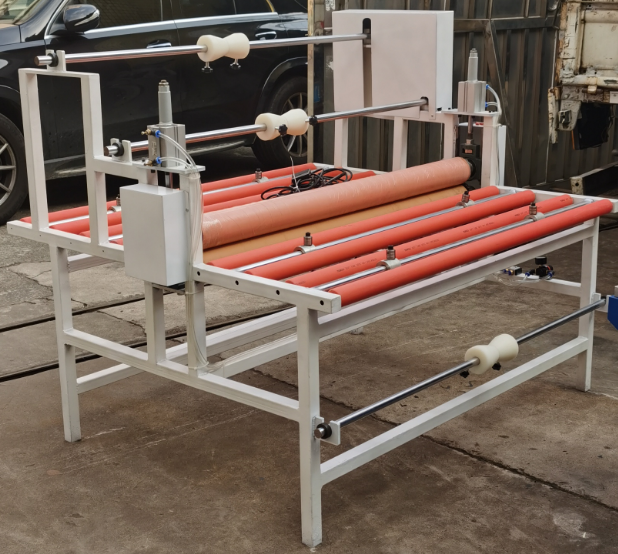
A flatbed laminator is essential industrial finishing equipment widely used for surface protection, film coating, and decorative lamination on flat substrates. For enterprises engaged in aluminum processing, architectural decoration, and metal panel manufacturing, selecting a professionalaluminum film lamination machine, aluminum sheet laminating machine, or dedicated laminating machine for aluminum panel and lamination machine for aluminum board directly determines finished product quality, production stability, and long-term operational benefits. Many buyers blindly purchase equipment without matching actual production conditions, resulting in low efficiency, poor lamination effect, and high comprehensive costs. To help businesses make precise and cost-effective decisions, this article summarizes the core factors for selecting a qualified flatbed laminator suitable for aluminum panel and sheet processing.
1. Clarify Actual Production Scale and Processing Needs
Production scale is the primary basis for equipment selection. Small processing factories, customized workshops, and small-batch manufacturers are more suitable for semi-automatic or manual flatbed laminators, which feature flexible operation and low investment costs. In contrast, large-scale aluminum profile factories, aluminum sheet processing plants, and mass production enterprises need fully automatic intelligent equipment such as an aluminum sheet laminating machine and industrial-grade aluminum film lamination machine to support continuous high-speed operation. In addition, users must confirm processing materials in advance. Professional laminating machine for aluminum panel and lamination machine for aluminum board are structurally optimized for the flat, hard, and easy-to-scratch characteristics of aluminum materials, which is different from ordinary paper and plastic laminators. Only equipment customized for aluminum substrates can ensure bubble-free, wrinkle-free, and high-adhesion lamination results.
2. Verify Core Technical Specifications
Technical parameters determine the upper limit of equipment performance and finished product quality. First, confirm the maximum working width, which must cover the maximum size of aluminum sheets and panels in daily production to avoid size restrictions. Second, check the adjustable speed range. A qualified aluminum film lamination machine supports stepless speed regulation, matching different film materials and production efficiency requirements. Third, precise constant-temperature control is indispensable. Aluminum surface lamination requires stable and uniform heating temperature to prevent film warping, degumming, and uneven pasting caused by temperature deviation. Reasonable parameters ensure stable operation of the laminating machine for aluminum panel in long-term industrial production and guarantee consistent surface finishing of aluminum boards and sheets.
3. Focus on Safety Certification and Environmental Performance
Industrial production equipment must meet international safety certification standards to ensure operator safety and standardized production procedures. Qualified lamination machine for aluminum board is equipped with emergency stop protection, overload protection, and safe insulation settings. Meanwhile, modern enterprises pay more attention to environmental protection performance. Energy-saving and low-consumption flatbed laminators reduce energy waste and meet green production standards, which is more in line with the sustainable development needs of modern aluminum processing factories.
4. Match Special Functional Requirements
For users with personalized processing needs, such as double-sided film pasting, high-gloss film lamination, and anti-scratch protective film processing, it is necessary to select customized functional models. Professional aluminum film lamination machine can be equipped with automatic film cutting, deviation correction, and constant-pressure lamination functions according to demands, perfectly meeting the diversified processing requirements of aluminum panels, aluminum sheets, and special-shaped flat aluminum workpieces.
To sum up, choosing a suitable flatbed laminator requires comprehensive consideration of production scale, processing materials, technical parameters, brand quality, after-sales service, and cost performance. For aluminum processing enterprises, selecting a professional aluminum sheet laminating machine, laminating machine for aluminum panel, and lamination machine for aluminum board is the core premise to stabilize lamination quality, improve production efficiency, and enhance product competitiveness. Scientific equipment selection can help enterprises achieve standardized, high-efficiency, and high-quality aluminum surface lamination production.